


A CPA Income Verification Letter has become one of the most trusted documents for lenders and landlords when traditional proof of income falls short. Whether the applicant is self-employed, a business owner, or has multiple income streams, this letter helps decision-makers understand income clearly, accurately, and responsibly.
At its core, the letter bridges the gap between tax records and real-world financial capacity. When prepared correctly, a CPA Letter aligns professional judgment with Internal Revenue Service documentation, without overstating assurance or misrepresenting facts.
What Is a CPA Income Verification Letter?
A CPA Income Verification Letter is a formal document prepared by a licensed CPA that summarizes an individual’s income based on reviewed financial and tax records. It is written for a clearly defined intended recipient, such as a bank, mortgage lender, or property management company.
The letter does not replace tax returns or audits. Instead, it provides context, clarity, and professional interpretation of reported income.
Why Lenders and Landlords Rely on CPA Letters
Financial reviewers are not only interested in how much income exists, but also how reliable that income is. A CPA Letter helps answer key questions:
- What is the primary income source?
- Is the income recurring or variable?
- Does it align with filed tax records?
Because CPAs rely on authoritative documentation, these letters carry credibility without crossing into guarantees.
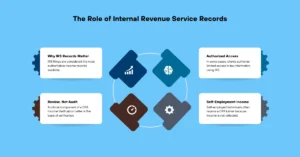
The Role of Internal Revenue Service Records
Why IRS Records Matter
IRS filings are considered the most authoritative income records available. A CPA Income Verification Letter typically relies on tax returns and supporting documents already filed with the IRS.
This reliance reassures lenders and landlords that income figures are not estimates but are grounded in reported data.
Authorized Access and Documentation
In some cases, clients authorize limited access to tax information using Internal Revenue Service Form 8821, which allows a CPA to review tax records without granting representation rights.
A CPA may also reference:
- A valid Business EIN
- Filed personal or business tax returns
- Supporting schedules and statements
Basis of Verification: How CPAs Determine Income
Review, Not Audit
A critical component of a CPA Income Verification Letter is the basis of verification. The CPA explains what records were reviewed and how income was derived.
This is where a no audit or assurance disclaimer becomes essential. The letter clearly states that:
- No audit, review, or assurance engagement was performed
- The CPA relied on provided records and filed returns
- The letter is for informational purposes only
This transparency protects both the CPA and the recipient.
Income Categories Commonly Addressed
W-2 Employment Income
For individuals with traditional employment:
- Income is verified using W-2 forms
- Consistency with tax returns is confirmed
- Variability (bonuses or commissions) may be explained
Self-Employment Income
Self-employed individuals often require a CPA Letter because income is not reflected in paystubs.
CPAs commonly reference:
- Schedule C filings
- Net income after ordinary and necessary expenses
- Patterns across multiple tax years
Independent Contractor Income
For contractors and freelancers:
- Form 1099-NEC income is summarized
- Variability and client diversification may be noted
- Supporting bank statements may be reviewed for consistency
Each income category is addressed separately to avoid confusion.
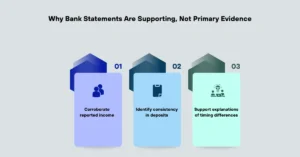
Why Bank Statements Are Supporting, Not Primary Evidence
While bank statements help show cash flow, they are not income documents on their own. A CPA uses bank statements to:
- Corroborate reported income
- Identify consistency in deposits
- Support explanations of timing differences
However, IRS-filed records remain the primary source for verification.
CPA Letter vs Other Proof of Income
Why a CPA Letter Carries More Weight
Compared to screenshots, invoices, or self-prepared summaries, a CPA Letter provides:
- Professional accountability
- Alignment with IRS records
- Clear explanation tailored to the recipient
This makes it especially valuable in loan underwriting and rental approvals.
EEAT and Professional Responsibility
A well-written CPA Income Verification Letter reflects:
- Experience in interpreting tax records
- Expertise in income classification
- Authoritativeness through licensed CPA involvement
- Trustworthiness via clear disclaimers and accurate reporting
These principles align not only with financial best practices but also with modern credibility standards.
When a CPA Income Verification Letter Is Most Useful
Common Scenarios
- Mortgage or personal loan applications
- Apartment or luxury rental approvals
- Situations involving variable or self-employment income
In these cases, the CPA Letter provides clarity where raw documents may raise questions.




