


When a borrower uses business funds to support a home purchase, mortgage underwriters apply a much higher level of scrutiny. Lenders must confirm that the funds are accessible, authorized, non-borrowed, and will not weaken the business after withdrawal. This is where a CPA Letter for Use of Business Funds Mortgage becomes essential, especially for entrepreneurs and owners already providing a CPA Letter for Self-Employed Mortgage Borrowers.
This article explains what lenders expect to see, how CPAs frame these letters compliantly, and why precise language and documentation matter for mortgage approval.
What Is a CPA Letter for Use of Business Funds in Mortgage Applications?
A CPA Letter for Use of Business Funds Mortgage is a non-attest, explanatory letter prepared at the borrower’s request for a specific lender and transaction. Its purpose is to explain:
- The source and nature of business funds
- The borrower’s authority to access and withdraw those funds
- Whether the withdrawal appears permitted and non-detrimental to business operations
The letter does not verify balances, audit accounts, or guarantee mortgage approval.
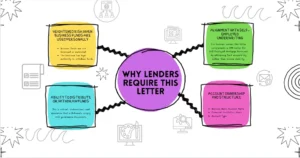
Why Lenders Require This Letter
Heightened Risk When Business Funds Are Used Personally
Mortgage lenders must ensure that:
- Business funds are not borrowed or restricted
- The borrower has legal authority to withdraw funds
- The business remains solvent after the withdrawal
Alignment With Self-Employed Underwriting
For business owners, this letter complements a CPA Letter for Self-Employed Mortgage Borrowers by addressing fund accessibility rather than income stability.
Business Bank Account Identification
Account Ownership and Structure
The letter typically identifies:
- Business Bank Account Name
- Financial Institution Name
- Account Type (Checking, Savings, Operating)
- Account Ownership (Business-owned)
This confirms that funds originate from legitimate business accounts—not personal or third-party sources.
Authorized Signers and Control
Lenders expect clarity on:
- Authorized Signers
- Borrower Authorization Level
- Borrower Ownership Percentage
These details establish legal access to funds.
Borrower Authority and Control Over Funds
Decision-Making Authority
The letter explains whether the borrower has:
- Control over distributions
- Authority to approve withdrawals
Ability to Distribute or Withdraw Funds
This is critical. Underwriters need assurance that withdrawals comply with governance documents.
Compliance With Operating Agreement
For LLCs and corporations, the letter may state that distributions are consistent with the operating agreement or bylaws, based on representations.
Availability and History of Business Funds
Cash Balance and Timing
The letter may describe:
- Available Cash Balance
- Average Business Account Balance
- Date Funds Became Available
Seasoned, stable balances are generally viewed more favorably.
Source of Accumulated Funds
Typical sources include:
- Retained earnings
- Operating profits
The letter avoids reclassifying income or validating balances.
Amount and Intended Use of Funds
Amount of Funds Intended for Use
Lenders expect a clear statement of:
- How much business cash is being applied to the mortgage
Type of Withdrawal
The letter identifies whether funds are taken as:
- Owner Draw
- Distribution
- Dividend
Tax Treatment (Descriptive Only)
The CPA may note general tax treatment (e.g., distribution vs draw) without giving tax advice.
Business Health After Withdrawal
Business Solvency After Withdrawal
Underwriters want comfort that the business remains viable after funds are withdrawn.
Adequacy of Working Capital Post-Withdrawal
The letter may state whether working capital appears sufficient based on historical records.
Impact on Ongoing Operations
This includes the business’s ability to:
- Meet payroll
- Pay vendors
- Service existing debt
Required Negative Confirmations
Mortgage lenders almost always expect explicit statements that the funds are not encumbered.
Confirmation Funds Are Not a Loan
The letter clarifies that funds are not loan proceeds.
Confirmation Funds Are Not Borrowed or Restricted
Common confirmations include:
- Funds are not borrowed
- Funds are not restricted
- Funds are not encumbered
No Pledge or Collateral Statement
The letter may state that funds are not pledged as collateral elsewhere.
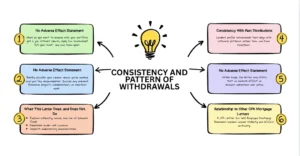
Consistency and Pattern of Withdrawals
Consistency With Past Distributions
Lenders prefer withdrawals that align with historical patterns rather than one-time exceptions.
No Adverse Effect Statement
Within scope, the letter may state that no adverse effect on business operations was noted.
Relationship to Other CPA Mortgage Letters
A CPA Letter for Self-Employed Mortgage Borrowers explains income stability and business continuity.
A CPA Letter for Use of Business Funds Mortgage explains cash accessibility and business impact.
Together, they form a complete underwriting narrative.
What This Letter Does, and Does Not, Do
What It Does
- Explains authority, source, and use of business funds
- Addresses lender risk concerns
- Supports underwriting documentation
What It Does Not
- Verify bank balances
- Guarantee mortgage approval
- Replace lender due diligence
Best Practices for Borrowers
Before Requesting the Letter
- Confirm lender-specific wording
- Avoid commingling funds
During Underwriting
- Keep transfers clean and well-documented
- Stay consistent with tax filings and governance documents
Best Practices for CPAs
Use Careful, Limited Language
Avoid assurance-style phrases and define reliance clearly.
Focus on Authority and Impact
Lenders care more about access and sustainability than accounting theory.




