


CPA letters are often misunderstood as simple confirmations of income or financial strength. In reality, they are tightly governed professional communications shaped by accounting standards, ethical rules, and regulatory limits. When a CPA prepares a letter under GAAP, every sentence is influenced by how rules affect CPA disclosures, what the CPA is permitted to say, and, just as importantly, what they must avoid saying.
This becomes especially critical in high-stakes use cases such as a CPA Letter for Mortgage & Loan Approval, where lenders expect clarity but CPAs must remain within strict professional boundaries.
What Does “Under GAAP” Mean for a CPA Letter?
Generally Accepted Accounting Principles (GAAP) establish how financial information is recognized, measured, and disclosed. While CPA letters are not financial statements, they still rely on GAAP concepts to ensure consistency, transparency, and professional integrity.
A CPA letter under GAAP:
- Relies on information derived from GAAP-based records
- Avoids conclusions that exceed available evidence
- Clearly defines scope, limitations, and intent
These principles protect both the CPA and the recipient.
The Professional Framework Governing CPA Letters
Role of the American Institute of Certified Public Accountants (AICPA)
The AICPA sets ethical and professional standards that govern how CPAs communicate with third parties. Its guidance strongly influences how CPA letters are drafted, especially regarding wording, disclaimers, and scope.
Auditing and Assurance Standards
Even when no audit is performed, CPA letters are shaped by:
- Statements on Auditing Standards
- Public Company Accounting Oversight Board Auditing Standards (by analogy for independence and objectivity)
These standards reinforce a key rule: CPAs must not imply assurance when none exists.
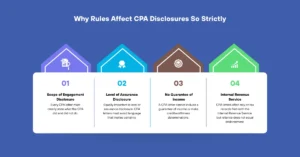
Why Rules Affect CPA Disclosures So Strictly
Scope of Engagement Disclosure
Every CPA letter must clearly state what the CPA did and did not do. This is known as scope of engagement disclosure.
A CPA typically clarifies:
- Records reviewed
- Time period covered
- No audit, review, or examination performed
This protects against misinterpretation by lenders or other recipients.
Level of Assurance Disclosure
Equally important is level of assurance disclosure. CPA letters must avoid language that implies certainty, validation, or guarantees.
This means:
- No certification of income accuracy
- No opinion on future earnings
- No assurance of financial outcomes
These limits are non-negotiable under professional rules.
Why CPAs Cannot Guarantee Outcomes
No Guarantee of Income or Creditworthiness
A CPA letter cannot include a guarantee of income or make creditworthiness determinations. These decisions belong exclusively to lenders and underwriters.
Even in a CPA Letter for Mortgage & Loan Approval, the CPA’s role is explanatory, not predictive or approving.
Any implication that a CPA is endorsing a loan decision would violate professional standards.
Interaction With Tax and Regulatory Rules
Internal Revenue Service and Circular 230
CPA letters often rely on tax records filed with the Internal Revenue Service, but reliance does not equal endorsement.
Under IRS Circular 230, CPAs must:
- Avoid misleading statements
- Clearly state reliance on taxpayer-provided information
- Avoid representations that could increase IRS audit exposure
This is why many letters include IRS audit risk statements, clarifying that the letter does not reduce or increase audit likelihood.
Authorization and Use Limitations
Scope-Specific Authorization
CPA letters are almost always issued with scope-specific authorization, meaning:
- The letter is intended for a named recipient
- It cannot be reused for other lenders or purposes
- The CPA assumes no responsibility beyond the stated scope
This protects against misuse or overreliance.
How GAAP-Based CPA Letters Affect Mortgage and Loan Decisions
CPA Letter for Mortgage & Loan Approval Under GAAP
Mortgage underwriters rely on CPA letters for context, not conclusions. GAAP-based discipline ensures that:
- Income explanations align with accounting principles
- Expense treatment is consistent and defensible
- No assurance language distorts risk assessment
This consistency is why lenders trust CPA letters—even with strict disclaimers.
Common Misunderstandings About CPA Letters
What CPA Letters Are Not
- They are not audits
- They are not income guarantees
- They are not loan approvals
- They are not compliance certifications
Understanding these boundaries prevents unrealistic expectations.
Why These Rules Protect Everyone Involved
When rules affect CPA disclosures, they serve an important purpose:
- Protect the CPA from professional liability
- Protect lenders from relying on improper assurances
- Protect applicants from misleading representations
This balance is essential to maintaining trust in financial reporting.

EEAT Perspective: Why GAAP-Based CPA Letters Build Credibility
From an EEAT standpoint, CPA letters demonstrate:
- Experience through professional judgment
- Expertise in accounting and reporting standards
- Authoritativeness via adherence to AICPA and GAAP rules
- Trustworthiness through clear, conservative disclosures
This is why lenders, regulators, and courts continue to rely on them.




