


Mortgage underwriting treats self-employed borrowers differently, and for good reason. Income may be variable, business-driven, or reported across multiple records. To bridge the gap between tax documents and underwriting decisions, lenders often request a CPA letter. This guide explains lender guidelines for self-employed borrowers, what underwriters expect to see, and how a CPA Letter for Self-Employed Income Verification supports the process without crossing professional boundaries.
What Is a CPA Letter for Self-Employed Mortgage Borrowers?
A CPA letter for self-employed mortgage borrowers is a non-attest, explanatory letter prepared at the borrower’s request. Its purpose is to provide clear context around income sources, business structure, and historical performance so lenders can evaluate risk appropriately.
The letter:
- Explains income characteristics and continuity
- Summarizes records reviewed and periods covered
- Does not verify income, audit records, or guarantee approval
Final income qualification always remains with the lender.
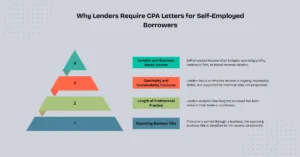
Why Lenders Require CPA Letters for Self-Employed Borrowers
Variable and Business-Based Income
Self-employed income often includes operating profits, contractor fees, or mixed revenue streams. Underwriters need context to interpret these figures accurately.
Continuity and Sustainability Concerns
Lenders focus on whether income is ongoing, reasonably stable, and supported by historical data, not projections.
Borrower Identification and Classification
Applicant Details
A compliant letter identifies:
- Self-Employed Applicant Full Name
- Personal Tax Identification Reference (not typically disclosed in full)
Work Classification
The letter clarifies:
- Independent Contractor Classification
- Primary Vocational Activity
This helps underwriters classify income correctly.
Professional History and Practice Duration
Length of Professional Practice
Lenders evaluate how long the borrower has been active in their trade or profession.
Operating Business Title
If income is earned through a business, the operating business title is identified to link records consistently.
Business Registration and Legal Configuration
Registration and Structure
Where applicable, the letter references:
- Commercial Registration Identifier
- Legal Business Configuration (sole proprietorship, LLC, S-Corp, partnership)
Commencement and Location
- Business Commencement Timestamp
- Principal Place of Business
These details support legitimacy and operating continuity.
Income Measures and Behavior
Gross Receipts Indicator
Gross receipts provide a high-level view of revenue generation before expenses.
Normalized Income Estimate
The letter may describe normalized income derived from historical records, without determining qualifying income.
Earnings Volatility Assessment
If income fluctuates, the letter explains patterns (seasonality, market conditions) descriptively.
Income Continuity and Permanence
Continuing Income Expectation
Any commentary is historical and descriptive, grounded in prior performance.
Income Source Permanence Statement
The letter may state whether income sources appear ongoing based on records reviewed, without forecasting.
Records Reviewed and Periods Evaluated
Records Assessment Category
Common categories include:
- Tax filings
- Financial statements
- Internal accounting summaries
Financial Period Evaluated
The letter specifies the exact period reviewed.
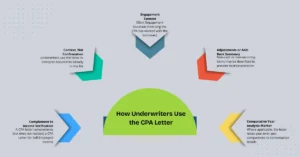
Comparative Year Analysis Marker
Where applicable, the letter notes year-over-year comparisons to contextualize trends.
Adjustments and Add-Backs (Descriptive Only)
Adjustments or Add-Back Summary
Non-cash or non-recurring items may be described to prevent misinterpretation, without recalculating income.
CPA Identification and Professional Standing
Attesting CPA Details
A lender-acceptable letter includes:
- Attesting CPA Name
- Professional License Status
- Issuing Licensing Board
- Registration Serial Code
Engagement Context
- Client Engagement Duration (how long the CPA has worked with the borrower)
Firm Identification and Contact Information
Practice Details
- Accounting Firm Designation
- Business Mailing Location
- Office Communication Number
- Professional Email Contact
These allow lender verification and follow-up.
Attestation Limits and Disclaimers
Attestation Limitation Statement
The letter clearly states:
- No audit or assurance was performed
- Information relies on client-provided records
- The letter is intended solely for the specified mortgage review
These limits are essential for compliance and risk management.
How Underwriters Use the CPA Letter
Context, Not Confirmation
Underwriters use the letter to interpret documents already in the file, tax returns, bank statements, and disclosures.
Complement to Income Verification
A CPA letter complements (but does not replace) a CPA Letter for Self-Employed Income Verification by adding business and continuity context.
What the Letter Does, and Does Not, Do
What It Does
- Clarifies income structure and history
- Explains volatility and continuity
- Supports lender risk assessment
What It Does Not
- Verify income accuracy
- Predict future earnings
- Guarantee mortgage approval
Recommended Steps for Mortgage Borrowers
Keep Documentation Consistent
Ensure the CPA letter aligns with tax filings and loan disclosures.
Avoid Overreach
Requests for guarantees or predictions can delay underwriting.
Professional Standards for CPAs Issuing Mortgage Letters
Define Scope Precisely
State purpose, period, and reliance clearly.
Use Neutral, Evidence-Based Language
Describe facts shown by records, no more, no less.




