

For self-employed borrowers, lenders often want confirmation that income reported on a mortgage application aligns with what has been filed with the IRS. In these situations, a CPA letter referencing IRS records can provide useful context, without crossing into verification or assurance. This article explains how such letters are used, what they typically reference, and how they differ from a CPA Comfort Letter for Self-Employed borrowers, all while staying compliant with professional standards and EEAT principles.
What Is a CPA Letter Referencing IRS Records?
A CPA letter referencing IRS records is a non-attest, explanatory letter prepared at a borrower’s request. Its purpose is to describe, at a high level, which IRS-related records were reviewed and what those records indicate about filing history, not to certify income or validate figures.
The letter:
- References specific IRS record types and tax forms
- Confirms that returns were filed for stated years
- Discloses known amendments or issues, if applicable
It does not verify accuracy, audit returns, or approve income for lending.
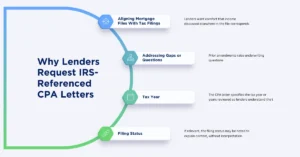
Why Lenders Request IRS-Referenced CPA Letters
Aligning Mortgage Files With Tax Filings
Lenders want comfort that income discussed elsewhere in the file corresponds to what was filed with the IRS.
Addressing Gaps or Questions
These letters are commonly requested when:
- Income is variable
- Multiple tax forms are involved
- Prior amendments raise underwriting questions
IRS Record Types Commonly Referenced
IRS Record Type Referenced
The letter may reference records such as:
- Transcripts
- Copies of filed returns
- IRS acknowledgments
The specific record source is stated clearly.
Tax Form
Commonly referenced forms include:
- Individual returns
- Business schedules or entity returns
The letter identifies the tax form without restating its contents.
Tax Years and Filing Context
Tax Year
The CPA letter specifies the tax year or years reviewed so lenders understand the timeframe covered.
Confirmation Returns Were Filed
A factual statement may confirm that returns were filed for the referenced years.
Filing Status
If relevant, the filing status may be noted to explain context, without interpretation.
IRS Acceptance and Amendments
IRS Acceptance Acknowledgment
Where applicable, the letter may reference that filings were accepted by the IRS.
Amendments Disclosure
If amended returns exist, the letter discloses this fact without evaluating impact.
Outstanding IRS Issues Known
Any known unresolved IRS matters may be disclosed factually, if relevant to the lender’s request.
CPA Review Level and Scope
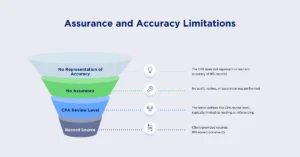
CPA Review Level
The letter defines the CPA review level, typically limited to reading or referencing existing records.
Record Source
All information is identified as coming from:
- Client-provided records
- IRS-issued documents
Assurance and Accuracy Limitations
No Representation of Accuracy
A core element of the letter is a statement that:
- The CPA does not represent or warrant accuracy of IRS records
No Assurance
The letter clearly states:
- No audit, review, or assurance was performed
This language is essential for compliance and risk management.
How Lenders Use These Letters
Context, Not Confirmation
Lenders use the letter to:
- Confirm filing history
- Understand which records exist
- Reduce follow-up questions
They do not rely on it to calculate qualifying income.
IRS-Referenced Letters vs Comfort Letters
Key Differences
A CPA Comfort Letter for Self-Employed:
- Provides general familiarity-based context
- Uses negative-assurance language
A CPA letter referencing IRS records:
- Identifies specific IRS-related documents
- Focuses on filing status and record existence
Both are non-attest, but they answer different underwriting questions.
What the Letter Covers, and What It Does Not
What It Covers
- IRS record types referenced
- Tax forms and years reviewed
- Filing and amendment disclosures
What It Does Not Do
- Verify income amounts
- Certify tax accuracy
- Guarantee mortgage approval
Borrower Considerations
Expect Narrow Language
These letters are intentionally limited to avoid misinterpretation.
Maintain Consistency
Ensure IRS records referenced align with other mortgage documentation.
Professional Considerations for CPAs
Keep Scope Explicit
Always define:
- Records referenced
- Years covered
- Reliance limits
Avoid Interpretive Statements
Stick to factual references, avoid opinions on income or tax positions.




